
About crop production
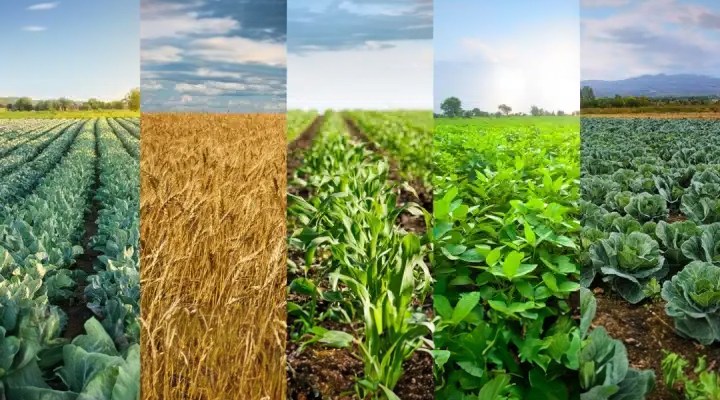
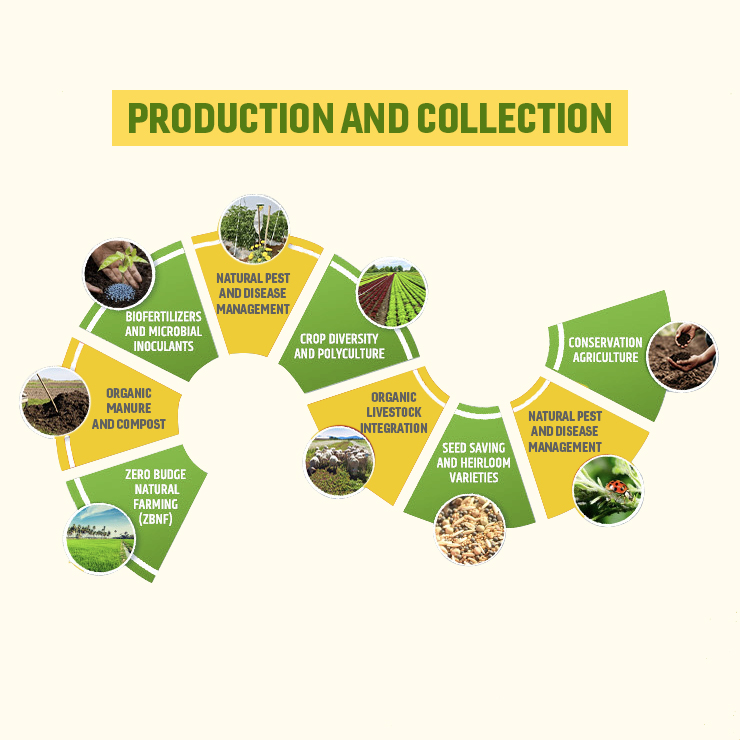
Organic crop production management should cover a diverse planting scheme. For perennial crops, this should include plant-based ground cover crops. For annual crops, this should include diverse crop rotation practices, cover crops (green manures), intercropping or other diverse plant production methods.
Similarly, for annual crops like vegetables or grains, a range of practices should be employed to promote diversity and sustainability. This includes implementing diverse crop rotation patterns, where different crops are planted sequentially in the same field to break pest and disease cycles and improve soil health. Additionally, utilizing cover crops, also known as green manures, helps enrich the soil with organic matter and nutrients during periods when the main crop is not growing.
Intercropping, which involves growing two or more crops together in the same field, and other methods aimed at increasing plant diversity, further contribute to ecological resilience and productivity in organic farming systems. By embracing these diverse planting approaches, organic crop production can thrive while minimizing reliance on external inputs and promoting environmental stewardship.
crop production plan
The producer seeking certification under the NPOP (hereinafter, referred to as ‘standards’) shall be required to develop an organic crop production plan. This plan shall include:
Description of the crops in the production cycle (main crop and intercrop) as per the eopl climatic seasons.
- Description of practices and procedures to be performed and maintained.
- List of inputs used in production along with their composition, frequency of usage, application rate, and source of commercial availability.
- Source of organic planting material (seeds and seedlings).
- Descriptions of monitoring practices and procedures to be performed and maintained to verify that the plan is being implemented effectively.
- Description of the management practices and physical barriers established to prevent commingling and contamination of organic production units from conventional farms, split operations, and parallel operations
- Description of the record-keeping system implemented to comply with the requirements.
Conversion Requirements
- The establishment of an organic management system and building of soil fertility requires an interim period, known as the conversion period. While the conversion period may not always be of sufficient duration to improve soil fertility and for re-establishing the balance of the ecosystem, it is the period in which all the actions required to reach these goals are started.
- A farm may be converted through a clear plan of how to proceed with the conversion. This plan shall be updated by the producer, if necessary, and shall cover all requirements to be met under these standards.
- The requirements prescribed under these standards shall be met during the conversion period. All these requirements shall be applicable from the commencement of the conversion period till its conclusion.
- The start of the conversion period may be calculated from the date first inspection of the operator by the Certification Body
- A full conversion period shall not be required where de facto requirements prescribed under these standards have been met for several years and where the same can be verified on the basis of available documentation. In such cases inspection shall be carried out in reasonable time intervals, before the first harvest.
Our team has a passion for making things with real value. This has led us to assemble a multi-talented group that can do just about anything: from building sets to photographing food, and crafting websites to developing apps, beautiful design, and adventure cinematography. Designers, engineers, creatives, makers, developers, and artists, unite. Let’s do something special together.
Duration of conversion period
- In the case of annual and biennial crops, plant products produced can be certified organic when the requirements prescribed under these Standards have been met during the conversion period of at least two (2) years (organic Management) before sowing (the start of the production cycle).
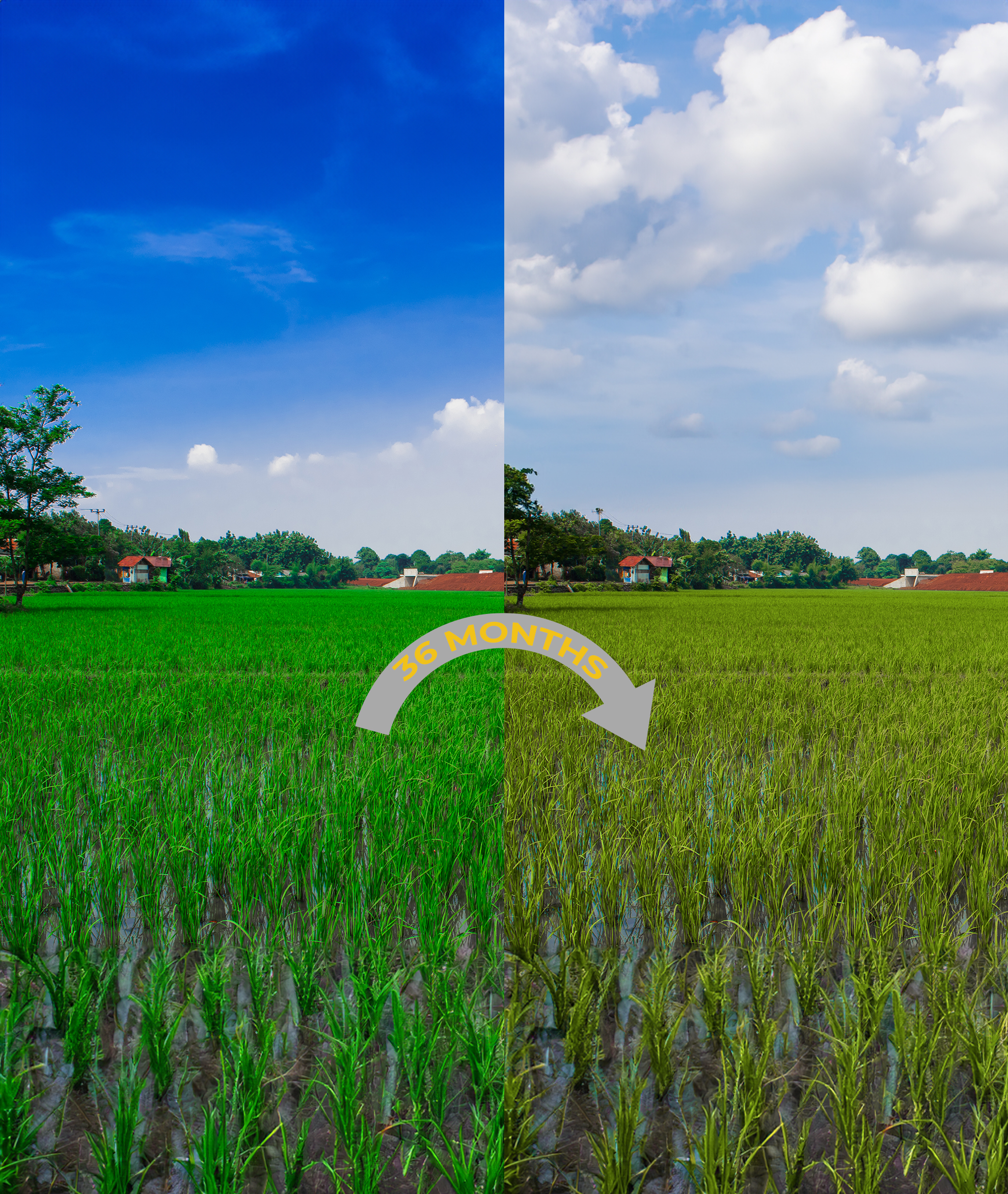
- In case of perennial plants other than grassland (excluding pastures and meadows), the first harvest may be certified as organic after at least thirty-six (36) months of organic management according to the requirements prescribed under these Standards.
- The accredited Certification Bodies shall decide in certain cases, for extension or reduction of the conversion period depending on the past status/use of the land and environmental condition.
- Twelve months reduction in conversion period could be considered for annuals as well as perennials provided, documentary proof has been available with the accredited Certification Body that the requirements prescribed under these Standards have been met for a period of minimum three (3) years or more. This could include the land that has been certified for a minimum of three (3) years under the ‘Participatory Guarantee System’ implemented by the Ministry of Agriculture and wherein, the products approved for use in organic farming as listed in Annex 1 and 2 of this Appendix have been applied. The accredited Certification Bodies shall also consider such a reduction in conversion period if it has satisfactory proof to demonstrate that for three (3) years or more, the land has been idle and/or it has been treated with the products approved for use in organic farming as listed Annex 1 and 2 of this Appendix.
- Organic products in conversion shall be sold as "produce of organic agriculture in conversion" or of a similar description, when the requirements prescribed under these Standards have been met for at least twelve months.
Landscape
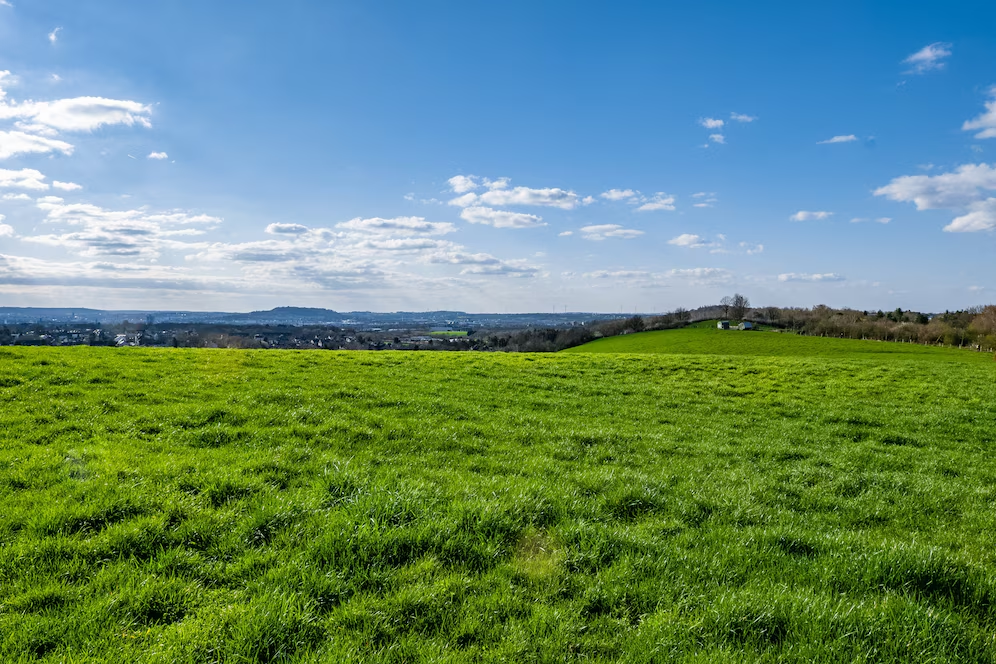
- Organic farming shall contribute beneficially to the ecosystem. The certification program shall set standards/procedures for a minimum percentage of the farm area to facilitate biodiversity and nature conservation
- Areas which are managed organically shall facilitate biodiversity, inter alia, in the
following manner:
- Extensive grassland such as moorlands, reed land or dry land
- In general all areas which are not under rotation and are not heavily manured.
- Extensive pastures, meadows, extensive grassland, extensive orchards, hedges, hedgerows, groups of trees and/or bushes, and forest lines.
- Ecologically rich fallow land or arable land
- Ecologically diversified (extensive) field margins.
- Waterways, pools, springs, ditches, wetlands and swamps and other water rich areas which are not used for intensive agriculture or aqua production.
Choice of Crops and Varieties
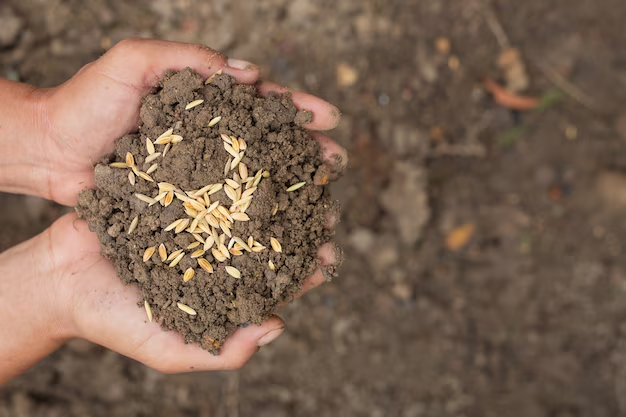
- Tall seeds and plant material shall be certified organic. Species and varieties cultivated shall be adapted to the soil and climatic conditions and be resistant to pests and diseases. In the choice of varieties, genetic diversity shall be taken into consideration.
- When organic seed and plant materials are available, they shall be used.
- When certified organic seed and plant materials are not available, chemically untreated conventional seed and plant material shall be used
- The use of genetically engineered seeds, transgenic plants, or plant material is prohibited.
Diversity in Crop Production & Management Plan
- The basis for crop production in organic farming shall take into consideration the structure and fertility of the soil and the surrounding ecosystem, with a view to minimizing nutrient losses.
- Where appropriate, the organic farms shall be required to maintain sufficient diversity in a manner that takes into account pressure from insects, weeds, diseases, and other pests, while maintaining or increasing soil, organic matter, fertility, microbial activity, and general soil health. For non-perennial crops, this is normal, but not exclusive, achieved by means of crop rotation preferably by leguminous crops.
- Soil fertility shall be maintained through, among other things, the cultivation of legumes or deep-rooted plants and the use of green manures, along with the establishment of a program of crop rotation several times a year and fertilization with organic inputs.
Nutrient Management
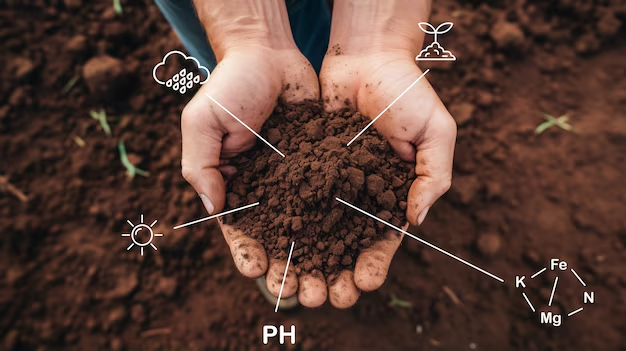
- Sufficient quantities of biodegradable material of microbial, plant, or animal origin produced on organic farms shall form the basis of the nutrient management program to increase or at least maintain its fertility and the biological activity within it.
- Fertilization management should minimize nutrient losses. Accumulation of heavy metals and other pollutants shall be prevented.
- Non-synthetic mineral fertilizers and brought-in biofertilizers (biological origin) shall be regarded as supplementary and not as a replacement for nutrient recycling.
- Desired pH levels shall be maintained in the soil by the producer.
- The certification program shall set limitations to the total amount of biodegradable material of microbial, plant or animal origin brought onto the farm unit, taking into account local conditions and the specific nature of the crops.
- The certification program shall set procedures that prevent animal runs from becoming over manuring where there is a risk of pollution
- Mineral fertilizers shall only be used in a supplementary role to carbon-based materials. Only those organic or mineral fertilizers that are brought into the farm (including potting compost) shall be used when the circumstances demand in accordance with Annex 1.
- Permission for use shall only be given when other fertility management practices have been optimized
- Manures containing human excreta (feces and urine) shall not permitted to prevent the transmission of pests, parasites, and infectious agents.
- Mineral fertilizers shall be applied in their natural composition and shall not be rendered more soluble by chemical treatment. The certification program may grant exceptions. These exceptions shall not include mineral fertilizers containing nitrogen.
- The certification program shall lay down restrictions for the use of inputs such as mineral potassium, magnesium fertilizers, trace elements, manures and fertilizers with a relatively high heavy metal content and/or other unwanted substances, e.g. basic slag, rock phosphate and sewage sludge. All synthetic nitrogenous fertilizers are prohibited.

Pest, Disease and Weed Management
- Organic farming systems shall be carried out in a way that ensures that losses from pests, diseases, and weeds are minimized. Emphasis is placed on the use of a balanced fertilizing program, the use of crops and varieties well-adapted to the environment, fertile soils of high biological activity, adapted rotations, intercropping, green manures, etc. Growth and development shall take place in a natural manner.
- Weeds, pests and diseases shall be controlled through a number of preventive cultural techniques which limit their development in a balanced nutrient management program, e.g. suitable rotations, green manures, early and pre-drilling seedbed preparations, mulching, mechanical control and the disturbance of pest development cycles. Accredited certification programs shall ensure that measures are in place to prevent transmission of pests, parasites and infectious agents.
- Pest management shall be regulated by understanding and disrupting the ecological needs of the pests. The natural enemies of pests and diseases shall be protected and encouraged through proper habitat management of hedges, nesting sites etc. An ecological equilibrium shall be created to bring about a balance in the pest-predator cycle
- Products used for pest, disease and weed management, prepared at the farm from local plants, animals and microorganisms, shall be allowed. If the ecosystem or the quality of organic products might be jeopardized, the certification program shall judge if the product is acceptable as per the procedure given to evaluate additional inputs to organic agriculture.
- Thermic weed control and physical methods for pest, disease and weed management shall be permitted.
- Thermic sterilization of soils to combat pests and diseases shall be restricted to circumstances where a proper rotation or renewal of soil cannot take place. The certification programme on a case-by-case basis may only give permission.
- All equipment from conventional farming systems shall be properly cleaned and free from residues before being used on organically managed areas.
- The use of synthetic herbicides, fungicides, growth regulators, synthetic dyes insecticides and other pesticides are prohibited. Permitted products for plant pest and disease control are listed in Annex 2. The producer shall keep documentary evidences of the need to use the product.
- Commercial products used as inputs shall always be evaluated as per the criteria given in Annex 3 before approval is given for use.
- The use of genetically engineered organisms or products is prohibited.
Contamination Control
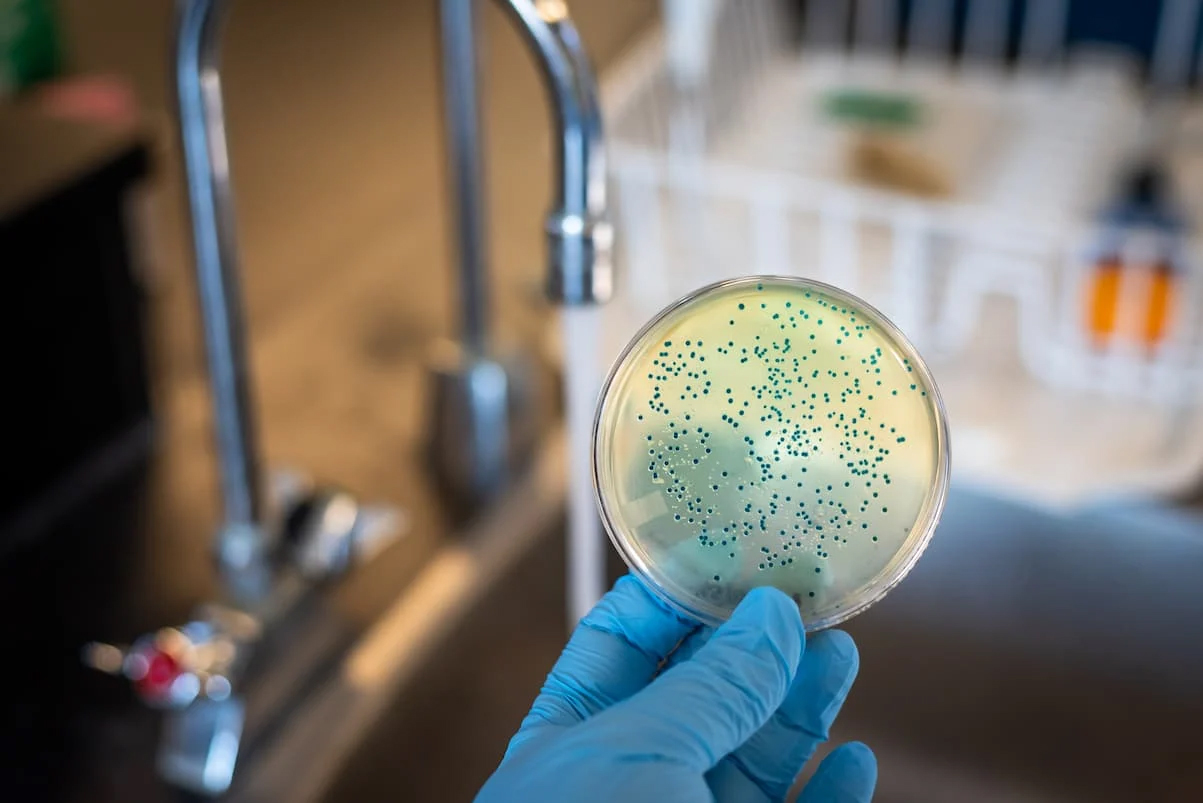
- All relevant measures shall be taken to minimize contamination from outside and within the farm.
- Buffer zones shall be maintained to prevent contamination from conventional farms. The buffer Zone should be sufficient in size to prevent the possibility of unintended contact of prohibited substances applied to adjacent conventional land areas/farms.
- In case of reasonable suspicion of contamination, the certification programme shall make sure that an analysis of the relevant products and possible sources of pollution (soil and water) shall take place to determine the level of contamination.
- Polyethylene and polypropylene or other polycarbonates coverings such as plastic mulches, fleeces, insect net and silage wrapping, only are allowed. These shall be removed from the soil after use and shall not be burnt on the farmland. The use of polychloride-based products is prohibited.
Soil and Water Conservation
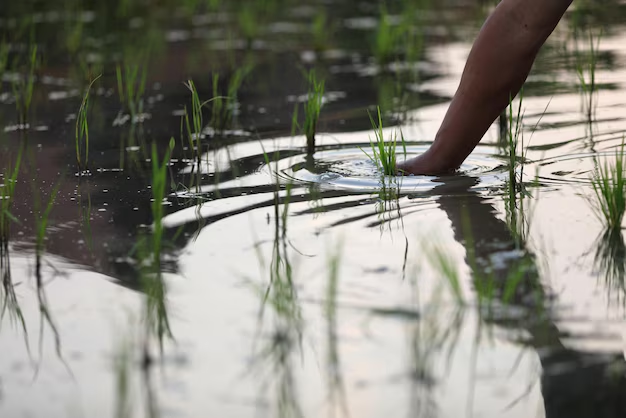
- Soil and water resources shall be handled in a sustainable manner. Relevant measures shall be taken to prevent erosion, salination of soil, excessive and improper use of water and the pollution of ground and surface water
- Clearing of land through the means of burning organic matter, e.g. slash-and-burn, straw burning shall be restricted to the minimum. The clearing of primary forest is prohibited.
- The certification programme shall require to check appropriate stocking rates which does not lead to land degradation and pollution of ground and surface water.
Collection of non cultivated material of plant origin / forest produces
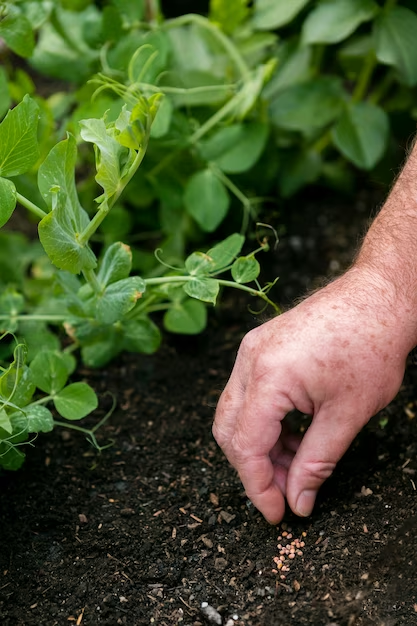
- The collection of wild plants and parts thereof, grown naturally, and in forest shall be certified as organic provided the collection areas have not received any treatment with products other than those authorised for use in organic production.
- In case of cultivation is carried out in forest area, the operators shall follow similar procedures of organic farm cultivation.
- Organic collection management should ensure that in case of minor forest produce collection, the State Government Act shall be applicable and should not exceed sustainable yield of the collected species or otherwise threaten the local ecosystem.
- The act of collection should positively contribute to the maintenance of natural areas. When harvesting or gathering the products, attention shall be paid to maintenance and sustainability of the ecosystem. Organic operators should collect products only from within the boundaries of the clearly defined wild collection area.
- Wild harvested products shall only be certified organic if derived from a stable and sustainable growing environment. Harvesting or gathering the product shall not exceed the sustainable yield of the ecosystem, or threaten the existence of plant or animal species.
- Products can only be certified organic if derived from a designated area for collection, clearly depicted in the map of the authorized area of collection by the forest department or state department, which is subject to inspection.
- The collection area shall be at an appropriate distance from conventional farming, pollution and contamination.
- The producer managing the harvesting or gathering of the products shall be clearly identified and be familiar with the collecting area in question.
| Inputs | Condition for use |
|---|---|
| Matter Produced on an Organic Farm Unit | |
| Farmyard & poultry manure, slurry, cow urine | Permitted |
| Crop residues and green manure | Permitted |
| Straw and other mulches | Permitted |
| Microbiological Preparations | |
| Bacterial preparations (biofertilizers) | Permitted |
| Biodynamic preparations | Permitted |
| Plant preparations and botanical extracts | Permitted |
| Vermiculate | Permitted |
| Peat | Permitted |
Products for Use in Fertilising and Soil Conditioning
In organic agriculture, the maintenance of soil fertility may be achieved through the recycling of organic material whose nutrients are made available to crops through the action of soil micro organisms.
Many of these inputs are restricted for use in organic production. In this annex "restricted" means that the conditions and the procedure for use shall be subjected to condition. Factors such as contamination, risk of nutritional imbalances and depletion of natural resources shall be taken into consideration.
“Factory” farming refers to industrial management systems that are heavily reliant on veterinary and feed inputs not permitted in organic agriculture
| Inputs | Condition for use |
|---|---|
| Sawdust, wood shavings, wood provided it comes from untreated wood | Permitted |
| Seaweed and seaweed products obtained by physical processes extraction with water or aqueous acid and/or alkaline solution | Restricted |
| Sewage sludge and urban composts from separated sources which are monitored for contamination | Restricted |
| Straw | Restricted |
| Vermicasts | Restricted |
| Animal charcoal | Restricted |
| Compost and spent mushroom and vermiculate substances | Restricted |
| Compost from organic household reference | Restricted |
| Compost from plant residues | Permitted |
| By-products from oil palm, coconut and cocoa (including empty fruit bunch, palm oil mill effluent (pome), cocoa peat and empty cocoa pods) | Restricted |
| By-products of industries processing ingredients from organic agriculture | Restricted |
Matter Produced Outside the Organic Farm Unit
| Inputs | Condition for use |
|---|---|
| Blood meal, meat meal, bone meal and feather meal without preservatives | Restricted |
| Compost made from any carbon based residues | Restricted |
| Farmyard manure, slurry, cow urine (preferably after control fermentation and/or appropriate dilution) “factory” farming sources not permitted | Restricted |
| Fish and fish products without preservatives | Restricted |
| Guano | Restricted |
| Human excrement | Prohibited |
| By-products from the food and textile industries of biodegradable
material of microbial, plant or animal origin without any synthetic additives |
Restricted |
| Peat without synthetic additives | Prohibited for soil conditioning |
| Inputs | Condition for use |
|---|---|
| Sodium chloride | Permitted |
| Trace elements (Boron, Ferrous, Manganese, Molybdenum, Zinc) |
Restricted |
| Wood ash from untreated wood | Restricted |
| Potassium sulphate | Restricted |
| Magnesium sulphate (Epsom salt) | Permitted |
| Gypsum (Calcium sulphate) | Permitted |
| Silage and silage extract excluding Ammonium silage | Permitted |
| Aluminum calcium phosphate | Restricted |
| Sulphur | Restricted |
| Stone meal | Restricted |
| Clay (bentonite, perlite, zeolite) | Permitted |
Minerals
| Inputs | Condition for use |
|---|---|
| Basic slag | Restricted |
| Calcareous and magnesium rock | Restricted |
| Calcified seaweed | Permitted |
| Calcium chloride | Permitted |
| Calcium carbonate of natural origin (chalk, limestone, gypsum and phosphate chalk) | Permitted |
| Mineral potassium with low chlorine content (e.g. sulphate of potash, kainite, sylvinite, patenkali) |
Restricted |
| Natural phosphates (e.g. Rock phosphates) | Restricted |
| Pulverised rock | Restricted |
| Inputs | Condition for use |
|---|---|
| Tobacco tea | Prohibited |
| Lecithin | Restricted |
| Casein | Permitted |
| Sea weeds, sea weed meal, sea weed extracts, sea salt and salty water | Restricted |
| Extract from mushroom (Shitake fungus) | Permitted |
| Extract from Chlorella | Permitted |
| Fermented product from Aspergillus | Restricted |
| Natural acids (vinegar) | Restricted |
| Preparation on basis of pyrethrins extracted from Chrysanthemum cinerariaefolium, containing possibly a synergist Pyrethrum cinerafolium | Restricted |
| Preparation from Quassia amara | Restricted |
| Release of parasite predators of insect pests | Restricted |
| Preparation from Ryania species | Restricted |
Products for Plant Pest and Disease Control
Certain products are allowed for use in organic agriculture for the control of pests and
diseases in plant production. Such products should only be used when absolutely necessary
and should be chosen taking the environmental impact into consideration. Numerous products are subject to restrictions in organic production.
The term "restricted" within this annex denotes stringent conditions and procedures.
| Inputs | Condition for use |
|---|---|
| Substances from plant and animal origin | |
| Azadiracta indica (neem preparations) | Permitted |
| Neem oil | Restricted |
| Preparation of rotenone from Derris elliptica Lonchocarpus, Thephrosia spp | Restricted |
| Gelatine | Permitted |
| Propolis | Restricted |
| Plant based extracts – garlic, pongamia etc | Permitted |
| Inputs | Condition for use |
|---|---|
| Microorganism used for biological pest control | |
| Viral preparation (eg. Granulosis virus, Nuclear Polyhedrosis Virus etc. | Permitted |
| Fungal preparations (Trichoderma spp.) | Permitted |
| Bacterial preparations (Bacillus spp) | Permitted |
| Parasites, Predators and sterilized insects | Permitted |
| Others | |
| Carbon dioxide and nitrogen gas | Restricted |
| Soft soap (potassium soap) | Permitted |
| Ethyl alcohol | Prohibited |
| Homeopathic and Ayurvedic preparations | Permitted |
| Herbal and biodynamic preparations | Permitted |
| Traps | |
| Physical methods (Chromatic traps, Mechanical traps, sticky traps and Pheromones | Permitted |
Minerals
| Inputs | Condition for use |
|---|---|
| Chloride of lime/soda | Restricted |
| Clay (e.g. bentonite, perlite, vermiculite, zeolite) | Permitted |
| Copper salts / inorganic salts (Bordeaux mix, copper hydroxide,
copper oxychloride) used as a fungicide depending upon the crop and under the supervision of accredited Certification Body |
Restricted |
| Mineral powders eg : stone meal | Prohibited |
| Light mineral oils | Restricted |
| Permanganate of potash | Restricted |
| Lime sulphur (calcium polysulphide) | Restricted |
| Silicates, clay (Bentonite) | Restricted |
| Sodium bicarbonate /td> | Permitted |
| Sulphur (as a fungicide, acaricide, repellant) | Restricted |
Procedure to Evaluate Additional Inputs to Organic Agriculture
Annex 1 & 2 refer to products for fertilizing of the soil and control of plant pests and diseases in organic agriculture. But there may well be other products which may be useful and appropriate for use in organic agriculture which may not fall under these headings. Annex 3 outlines the procedure to evaluate other inputs into organic production.
The following checklist should be used for amending the permitted substance list for fertilizing the soil conditioning purposes:
- The material is essential for achieving or maintaining soil fertility or to fulfill
specific nutrient requirements, for specific soil-conditioning and rotation purposes
which cannot be satisfied by the practices outlined in Chapter 3 or of other
products included in Annex 1 and the ingredients are of plant, animal, microbial
or mineral origin which may undergo the following processes:
- physical (mechanical, thermal)
- enzymatic
- microbial (composting, digestion) and
- Their use does not result in, or contribute to, unacceptable effects on, or contamination of, the environment, including soil organisms.
- Their use has no unacceptable effect on the quality and safety of the final product.
- Descriptions of monitoring practices and procedures to be performed and maintained to verify that the plan is being implemented effectively.
- Description of the management practices and physical barriers established to prevent commingling and contamination of organic production units from conventional farms, split operations and parallel operations
- Description of the record-keeping system implemented to comply with the requirements.
Procedure to Evaluate Additional Inputs to Organic Agriculture
The following checklist should be used for amending the permitted substance list for the purpose of plant disease or pest and weed control:
- The material is essential for the control of a harmful organism or a particular disease for which other biological, physical or plant breeding alternatives and/or effective management techniques are not available
- The substances (active compound) should be plant, animal, microbial or mineral
origin which may undergo the following processes:
- physical
- enzymatic
- microbial
- Their use does not result in, or contribute to, unacceptable effects on, or contamination of, the environment.
- Nature identical products such as pheremones, which are chemically synthesized may be considered if the products are not available in sufficient quantities in their natural farm, provided that the conditions for their use do not directly or indirectly contribute to contamination of the environment or the product.
Evaluation
When an input is to be evaluated it must first be investigated by certification programmes to see whether it fulfils the following six criteria. An input must fulfil all 6 requirements before it can be accepted as suitable for use in organic agriculture
Inputs should be evaluated regularly and weighed against alternatives. This process of regular evaluation should result in organic production becoming ever more friendly to humans, animals, environment and the ecosystem.
1. Necessity
The necessity of each input must be established. This will be investigated in the context in which the product will be used
Arguments to prove the necessity of an input may be drawn from such criteria as yield, product quality, environmental safety, ecological protection, landscape, and human and animal welfare.
The use of an input may be restricted to:
- Specific crops (especially perennial crops)
- Specific regions
- Specific conditions under which the input may be used
2. Nature and Way of Production
a. Nature
The origin of the input should usually be (in order of preference):
- Organic - vegetative, animal, microbial
- Mineral
Non-natural products which are chemically synthesized and identical to natural products may be used. When there is any choice, renewable inputs are preferred. The next best choice is inputs of mineral origin and the third choice is inputs which are chemically identical to natural products. There may be ecological, technical or economic arguments to take into consideration in the allowance of chemically identical inputs.
B. way of production
The ingredients of the inputs may undergo the following processes:
- Mechanical
- Physical
- Enzymatic
- Action of micro-organisms
- Chemical (as an exception and restricted)
C. Collection
The collection of the raw materials comprising the input must not affect the stability of the natural habitat nor affect the maintenance of any species within the collection area
3. Environment
- Environmental Safety: The input must not be harmful or have a lasting negative impact on the environment. Nor should the input give rise to unacceptable pollution of surface or ground water, air or soil. All stages during processing, use and breakdown must be evaluated
- Degradability: All inputs must be degradable to their mineral form. 38 Inputs with a high acute toxicity to non-target organisms should have a maximum half-life of five days. Natural substances used as inputs which are not considered toxic do not need to be degradable within a limited time.
- Acute toxicity to non-target organisms: When inputs have a relatively high acute toxicity for non-target organisms, restrictions for their use is needed. Measures have to be taken to guarantee the survival of these non-target organisms. Maximum amounts allowed for application may be set. When it is not possible to take adequate measures, the use of the input must not be allowed.
- Long-term chronic toxicity: Inputs which accumulate in organisms or systems of organisms and inputs which have, or are suspected of having, mutagenic or carcinogenic properties must not be used. If there are any risks, sufficient measures have to be taken to reduce any risk to an acceptable level and to prevent long lasting negative environmental effects.
- Chemically synthesized products and heavy metals Inputs should not contain harmful amounts of man made chemicals (xenobiotic products). Chemically synthesized products may be accepted only if identical to the natural product. Mineral inputs should contain as few heavy metals as possible. Due to the lack of any alternative, and long-standing, traditional use in organic agriculture, copper and copper salts are an exception for the time being. The use of copper in any form in organic agriculture must be seen, however, as temporary and use must be restricted with regard to environmental impact.
4. Human Health and quality
- Human Health: Inputs must not be harmful to human health. All stages during processing, use and degradation must be taken into account. Measures must be taken to reduce any risks and standards set for inputs used in organic production.
- Product Quality: Inputs must not have negative effects on the quality of the product - e.g. taste, keeping quality, visual quality.
5. Ethical Aspects-Animal Welfare
- Inputs must not have a negative influence on the natural behaviour or physical functioning of animals kept at the farm.
6. Socio Economic Aspects
- Consumer perception: Inputs should not meet resistance or opposition of consumers of organic products. An input might be considered by consumers to be unsafe to the environment or human health, although this has not been scientifically proven. Inputs should not interfere with a general feeling or opinion about what is natural or organic - e.g. genetic engineering.
Get in touch
Ready to take the next step towards organic certification? Reach out to our expert team today for personalized guidance and support. Let's work together to cultivate a greener tomorrow.